
You Offered Him the Foreman Job. He Said No. He Wasn’t Being Lazy.
Why your best employee turned down the foreman promotion, what the 2026 data says about it, and how to build a supervisor job in a manufacturing or construction shop that a good craftsman actually wants.
Friday afternoon. You pull your best hand into the office.
Call him Aaron, because we always do. Thirty-seven years old. Runs your best crew, reads a print faster than you do, two kids, a mortgage, and a truck payment. You slide the foreman job across the desk. Two more bucks an hour and the keys to the gang box, the exact thing you spent fifteen years chasing at his age.
He asks for the weekend to think about it.
Monday, he tells you no.
What do you think happened?
Here’s the story most owners land on by Monday afternoon. He doesn’t want it bad enough. No ambition. These kids don’t want to work.
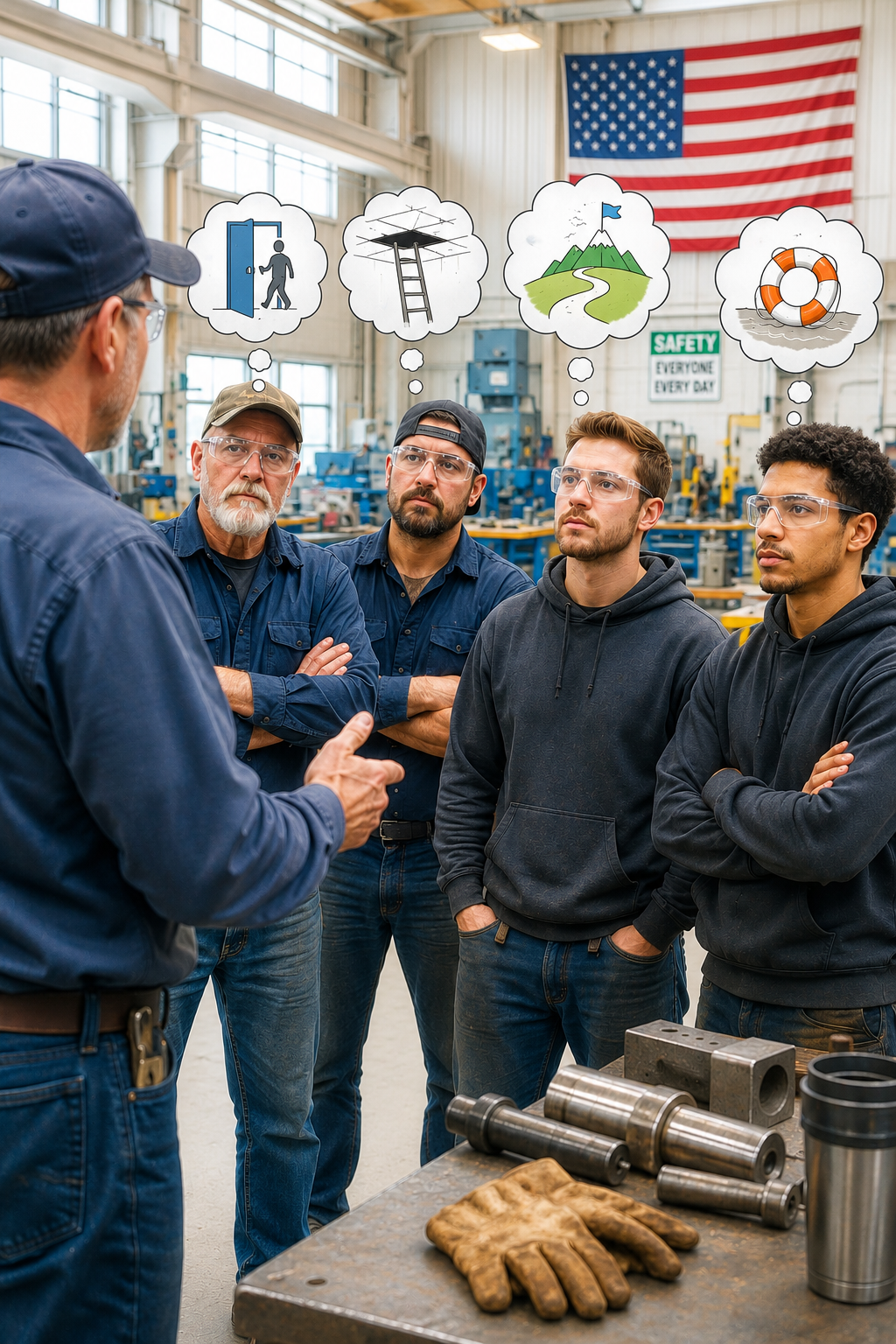
Here’s what actually happened. Aaron watched the last guy who took that job. Watched him eat lunch alone in his truck. Watched him take calls at nine at night. Watched him get chewed out for a schedule he didn’t build and a crew he didn’t pick. Two dollars an hour to absorb every problem in the building.
Then Aaron ran the math and passed.
That’s not laziness. That’s a man running a cost-benefit analysis on a job you never actually defined.
Why do millennials turn down promotions to foreman or supervisor?
Short answer: they’re not turning down leadership. They’re turning down the way the job is currently built: undefined, undertrained, and paid two dollars an hour more to absorb everybody’s problems.

Deloitte released the biggest generational study on the planet in May 2026 — 22,595 people across 44 countries. Read two of the numbers slowly.
Six percent of millennials say a leadership position is their number one career goal.
Sixty-seven percent say they want a senior leadership role at some point in their career.
Those two numbers don’t fight each other. They’re a schedule. Two out of three of your millennials want to run something eventually. One in sixteen wants it to be the headline of his life right now.
And when Deloitte asked what’s holding them back, money never came up. Stress and burnout, 49 percent. Too much responsibility, 48 percent. Work-life balance, 46 percent. Half of them look at the foreman job and see a health hazard.
Are supervisors really more stressed than the people they lead?
Yes. Gallup’s 2026 State of the Global Workplace report found leaders report more stress, more anger, and more loneliness than the people under them, and manager engagement dropped five points in one year.

Gallup ran the numbers on 9,880 leaders worldwide, and Aaron’s read of the room is dead on. Leaders report more stress than the people they lead, 46 percent against 39. More anger, 33 against 21. More loneliness, 31 against 21. Gallup’s own headline said it best: leaders have better lives but worse days. More money, more status, and a harder Tuesday.
Manager engagement worldwide also dropped from 27 percent to 22 percent in a single year, a nine-point slide since 2022. Managers used to carry an engagement premium over their crews. That premium is gone.
So go stand in your break room and look at your foreman job the way a thirty-seven-year-old looks at it. However that job reads from the outside, that’s your actual recruiting pitch.
Now here’s the part worth taping to the wall. Gallup put engaged leaders next to disengaged ones. Same job. Same pressure. Completely different experience: loneliness down 21 points, sadness down 18, anger down 15, stress down 10. What separated them? Not pay. Not perks. Not a title. Role clarity, a clear purpose, and line of sight into whether they’re actually winning.
That short list is the whole article.
Can you just hire a foreman from outside instead?
Not in 2026. The AGC/NCCER Workforce Survey released September 3, 2026 found 82 percent of construction firms have open salaried positions, and half say the candidates who show up aren’t qualified.
Maybe you figure you’ll go hire a foreman off the street. The survey of 1,830 companies closes that door. Eighty-two percent report openings for salaried positions. Of those, 87 percent say the seats are as hard or harder to fill than a year ago. Half say the candidates who do show up are missing the skills, the certificates, or the license. And 42 percent report worker shortages delayed projects, making the workforce the number one cause of delay in the industry.
Read that as a sentence. The outside market can’t supply you a foreman. The applicants who do come through are half unqualified. And the guy already on your payroll, the one who knows your customers, your equipment, and every quirk in the building, just told you no.
Eight in ten firms answered all of this by raising base pay. Thirty-six percent put money into training. Guess which group is working on the actual problem.
Why do first-time foremen fail?
Because most of them get promoted with a single conversation and no training. The Construction Industry Institute found fewer than half of new foremen receive any training in communication, and fewer than 30 percent in scheduling.
NCCER said it plainly in August 2026: it is not uncommon for a man to clock out one day as a craft worker and clock in the next day as a first-time supervisor, with little more than a single conversation in between.
Sound familiar?
CII measured what new foremen actually get. Under 48 percent get any training in effective communication. Under 37 percent in quality control. Under 30 percent in scheduling. Under 28 percent in time management.
You promoted your best welder, then handed him a job made of scheduling, conflict resolution, and paperwork, none of which anybody ever taught him. Then he struggles, and the story around the shop becomes “he wasn’t ready.”
Here’s the expensive part. When a top craftsman fails as a leader, you frequently lose him altogether. He walks, because the work stopped feeling like something he was good at. You didn’t just lose a foreman. You lost your best hand, everything he knew, and every dollar you ever put into him, over a ten-minute conversation on a Friday.
How do you get a good craftsman to say yes to leading a crew?
Define what winning looks like in the job, build visible steps between the floor and the office with a wage attached to each one, and train him before the promotion instead of after. The fix isn’t a better pitch. It’s a better job.
When I interviewed as a kid and asked a manager what my future looked like, he told me it could be whatever I wanted. I loved that answer. It felt like open road.
Tell a thirty-seven-year-old that today and you’ve just described a fog bank.
Start with the job itself. The HERDA System, High-Engagement Results & Department Alignment, is a results-first operating framework for shops with 35 to 200 direct-labor employees. It defines what winning looks like in every role by measurable results, not task lists, so supervisors manage to results instead of personalities. That includes the foreman seat. What does a great week look like in that job? Hours per unit. Rework percentage. Schedule adherence. Safety. When you can’t fill a page with that, neither can he. That’s exactly why he said no.
Then build a staircase, not a leap. Deloitte found only 21 percent of millennials want rapid promotions, while 45 percent want steady progress. There’s your design brief. Material handler one, two, three. Lead. Assistant foreman. Foreman. Every rung with a defined result and a wage step bolted to it. Micro-promotions a man can see from where he’s standing.
Put a number on every rung. The Herda Wage System is a three-part pay formula, Production, Tenure, and Wisdom, that places each person inside a market wage band based on what actually makes him valuable, not how long he’s been in the building. Aaron reads the formula and sees exactly what the next rung pays and what it takes to stand on it. He doesn’t need you to promise him anything. He controls the number himself.
Train before the promotion. Communication, conflict resolution, decision-making. Teach that while he’s still swinging a hammer, where the practice is cheap and the mistakes don’t cost you a customer. NCCER’s first recommendation is to have the leadership conversation two years before a seat opens. Ask your top craft workers straight: what do your next three years look like, and does any part of it include running a crew?
Want the deeper cut? Read
Crucial Conversations by Patterson, Grenny, McMillan, and Switzler. The foreman job is not made of welding. It’s made of hard conversations, and almost nobody on your floor was ever taught how to hold one.
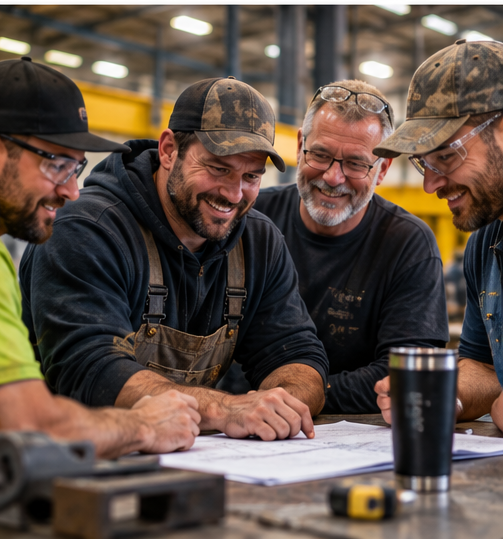
Your challenge this week: is your foreman job worth wanting?
Grab a blank sheet of paper and write “Foreman” across the top. Five points, one for each yes.
1. Can you write down what winning looks like in that role, three to five measurable results, not a task list?
2. Does the person sitting in that seat today know those numbers well enough to say them out loud, without looking?
3. Are there at least two visible rungs between your best hand and that job, each with a wage step attached?
4. Has anybody on your bench been trained in communication, conflict resolution, or scheduling before a promotion, not after?
5. Have you asked your top three craft workers, in the last twelve months, whether leading a crew is even part of what they want?
Add it up.
4–5: Your bench is real. Keep building it, and go tell those guys out loud.
2–3: You’ve got willing people and an undefined job. Fix the job first.
0–1: Your next promotion gets turned down, or gets accepted and washes out. Start with question one this week.
The leadership shortage in your building is not a shortage of willing people. It’s a shortage of jobs worth wanting.
HABITS EQUAL RESULTS DECIDE ACCORDINGLY.
So answer me this. What does winning look like for the foreman job in your shop, and when did you last say it out loud to the man you want in the seat?
Quick answers
What percentage of millennials want to be in leadership?
Per Deloitte’s 2026 Gen Z and Millennial Survey, 67 percent want a senior leadership role at some point in their career, but only 6 percent call it their number one career goal. The gap is timing and job design, not ambition.
Why would an employee turn down a promotion?
The top three reasons millennials give are stress and burnout (49 percent), too much responsibility (48 percent), and work-life balance (46 percent). In the trades, that usually means the supervisor job was never defined and the last guy who took it looked miserable.
How much training do new construction foremen get?
Not much. The Construction Industry Institute found fewer than half get training in communication, fewer than 37 percent in quality control, fewer than 30 percent in scheduling, and fewer than 28 percent in time management.
How do you build a career path in a manufacturing shop?
Micro-promotions. Break the jump from craft worker to foreman into visible rungs, level one, two, three, lead, assistant foreman, each with a defined result and a wage step attached. People stay when they can see the next step and what it pays.
What is the HERDA System?
A results-first operating framework from Brad Herda for manufacturing, construction, and skilled-trades companies with 35 to 200 direct-labor employees. It defines what winning looks like in every role, gets supervisors managing to results instead of personalities, and pairs with the Herda Wage System, a Production, Tenure, and Wisdom pay formula, so people can see the path and the money on it.
Tell me your number. Run the five questions on your foreman seat and reply with the score, 0 to 5. I read every one, and I’ll tell you straight where to start. Your honest number is worth more than a perfect one.
Then let’s dig into it. When your best hand just said no, or your last promotion washed out and took a good craftsman with it, that’s a design problem, and design problems are fixable. Thirty minutes, no charge, no slide deck. We walk your roster, look at what winning is supposed to look like in each seat, and you leave with the first move whether we ever work together or not. Email bherda@focalpointcoaching.com or go to vfbsolutions.com to grab a time.
Bring Brad to your event. When your association, leadership group, or industry conference is wrestling with a four- and five-generation workforce, my signature talk “We Grew Up Different” hands your audience a practical, no-fluff framework they can use the very next morning. Real operational experience on the stage, not academic theory. bradherda.com.
When this topic is of interest to you, invite me to talk about it in greater detail.
About the author. Brad Herda is The Blue-Collar Business Guy, a business coach, keynote speaker, and consultant in Sussex, Wisconsin, who works with multigenerational, family-owned manufacturing, construction, and skilled-trades companies through Vision Forward Business Solutions and FocalPoint Coaching. He spent decades in subcontract manufacturing leadership, created the HERDA System™ and the Herda Wage System, co-hosts the Blue-Collar BS Podcast, and delivers the keynote “We Grew Up Different.”
Sources: Deloitte Global Gen Z and Millennial Survey 2026 (May 13, 2026) · Gallup, State of the Global Workplace 2026 and “Leaders Have Better Lives but Worse Days” (April 2026) · AGC of America and NCCER, 2026 Workforce Survey (September 3, 2026) · NCCER, “Why New Construction Foremen Struggle” (August 24, 2026) · Construction Industry Institute, “Improving Frontline Supervision in Industrial Construction.”
Brad Herda
Vision Forward Business Solutions
Supporting blue-collar businesses to win their game every day