
Nobody Sends You an Invoice for Doing Nothing. That's Why It's the Most Expensive Thing in Your Building.
Let me ask you something most owners never stop to answer.
What is it costing you to keep doing exactly what you're doing right now with your people?
Not what it costs to fix it. What it costs to leave it alone. Because here's the part that makes this so dangerous, nobody sends you an invoice for doing nothing. There's no line item on your P&L that says "broken system tax." But it's there. And it's bleeding you every single week.
I see it all too often. An owner tells me, "We're fine, we're just always a little short-handed." Always. That word is doing a lot of work in that sentence. "Always hiring" is not a season. It's a symptom.
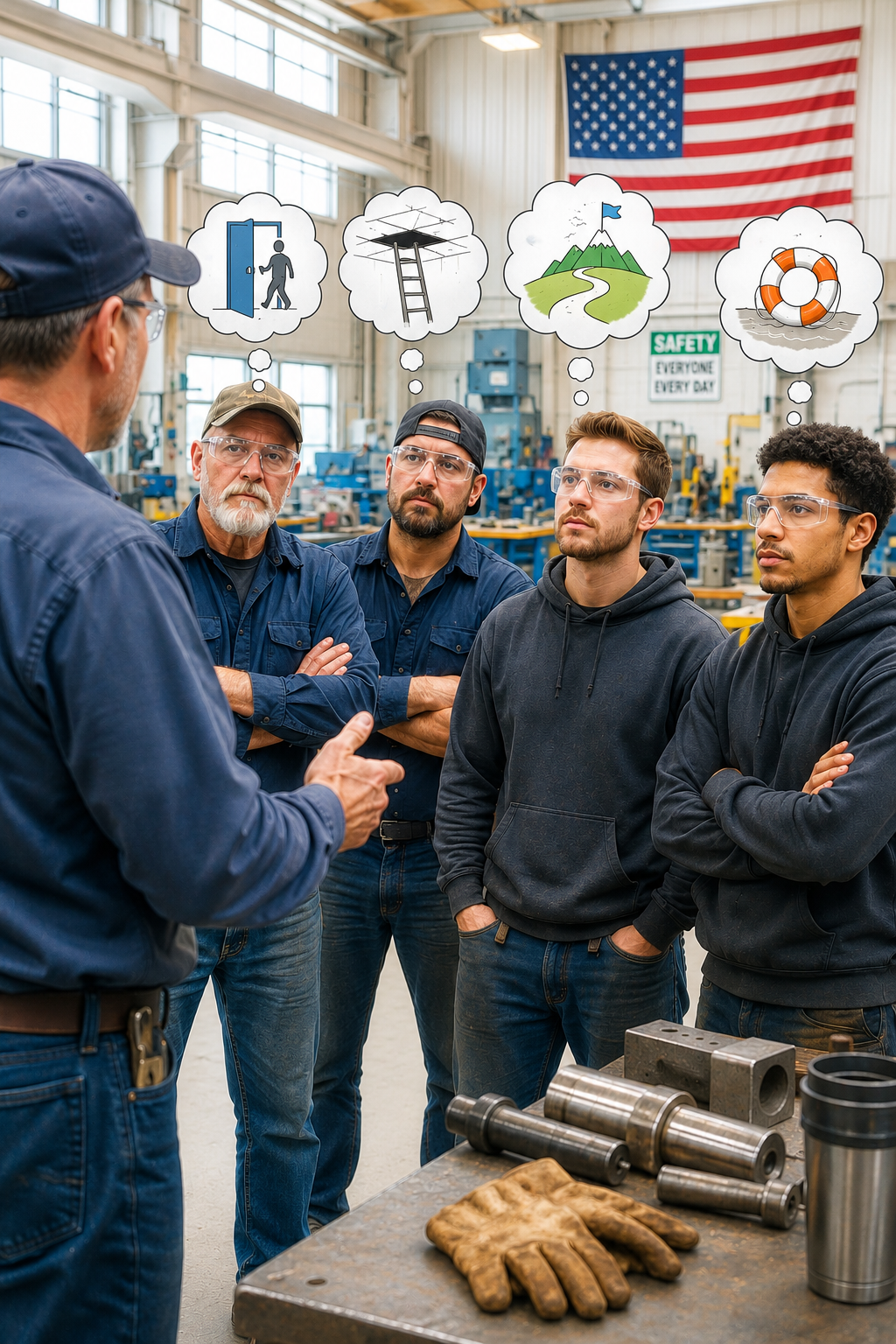
You've got five generations in that building. Are you running them like one?
Here's something that has never happened before in the history of work: right now you can have five generations standing on the same floor. Boomers who've forgotten more than most people will ever learn. Gen X is holding the whole thing together with duct tape and stubbornness. Millennials who want to know where this is going. Gen Z who showed up wired completely different than you were at 22. And Gen Alpha, the oldest of them are about to start showing up for their first jobs whether you're ready or not.

Most companies run all five the same way. Same onboarding. Same vague job description that hasn't been touched in ten years. Same definition of "good" nobody ever wrote down. Then they're shocked when the Boomer feels disrespected, Gen X is buried, the Millennials are frustrated, and the Gen Z kid is gone in 90 days.
That's not a people problem. That's a design problem. And design problems are fixable, but only if you stop pretending the cost of ignoring them is zero.
So what is it actually costing you?
Let's put real numbers on it, because "we should probably fix that someday" doesn't move anybody.
Replacing one hourly manufacturing employee costs 25 to 50 percent of their annual salary. One person. Now look at your turnover.
Manufacturing turnover has been running north of 40 percent; some plants cycle through half their workforce in a year. I've watched companies spend $150,000 a year just refilling the same handful of seats over and over. That money never shows up in a budget. It shows up in your capacity, your quality, and your delivery dates.
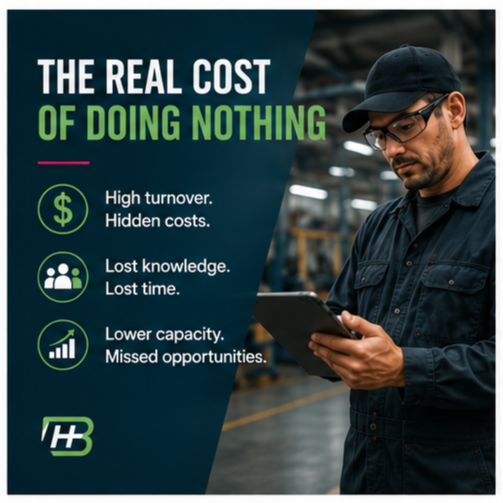
And the bleeding is fastest right at the start. One large industrial employer found that more than 80 percent of the people who left did it inside the first 90 days. Eighty percent. You're spending real money to recruit and onboard people who are out the door before they ever make you a dime.
Here's the other clock that's ticking, and it's quieter. Your veteran, the one who knows why that machine has to be restarted a certain way every Tuesday, is within a 3- to 5-year window before retirement. Deloitte projects up to 3.8 million manufacturing jobs opening over the next decade, and a huge share of that is Boomers walking out the door. When yours leaves, does the playbook leave with him? In most shops, the honest answer is yes. Decades of know-how walking out with a retirement cake and a handshake, and nobody wrote a word of it down.
That's the cost of doing nothing. It just doesn't send you a bill.
The fix isn't more recruiting. It's clarity.
Here's the hard truth. You don't have a people problem. You have a system problem. The talent is out there, a lot of it is already in your building, disengaged, waiting for someone to show them what winning looks like.
Try this. Ask ten people on your floor what "winning" looks like in their specific job. If fewer than eight give you the same answer, that's your clarity gap. And clarity gaps are exactly where good people go to check out, or to leave.
This is the whole reason I built the HERDA System High-Engagement Results & Department Alignment. It's not personality tests. It's not more meetings. It runs on four steps: Clarity, then Structure, then Execution, then Momentum. We define what winning looks like in every role, by results, not task lists. We design those roles around how each generation actually works, instead of fighting it. Your Boomers become mentors, measured by how much knowledge they transfer. Gen X builds the systems that outlast any one person.
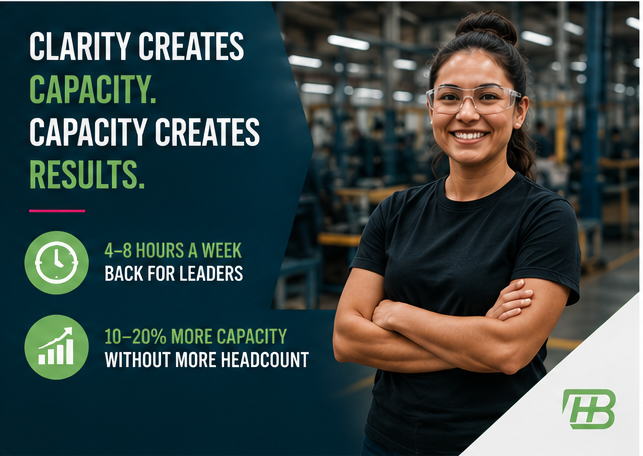
Millennials own the improvements. Gen Z runs a structured ramp with fast feedback. The companies that do this consistently hand their leaders 4 to 8 hours a week back, hours pulled straight out of firefighting, and find 10 to 20 percent more capacity without adding a single head.
And here's where most companies still get it wrong: they pay for time, not wisdom.
You can fix the clarity and still lose your best people, because your pay system is rewarding the wrong thing. Most shops pay for how long someone's been there. A warm body with a pulse and ten years gets paid more than the 30-day hire who already runs three machines and catches problems before they happen. Your good people see that. They're not stupid.
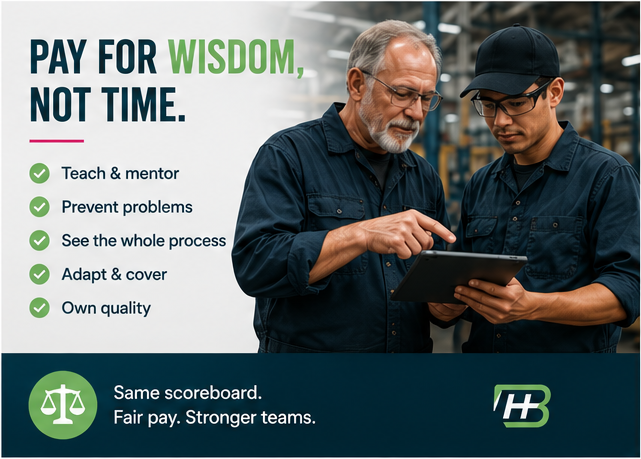
That's why HERDA pairs with the Herda Wage System. It scores what actually makes someone valuable, what I call the 5 W's of Wisdom. Are they teaching and mentoring, or hoarding what they know? Do they prevent errors, or just fight fires after the fact? Do they understand the whole process, or only push one button? Can they cover multiple roles, or are they a single point of failure? Do they own quality, or ship it and forget it?
Now you've got a Boomer with 30 years and a Gen Z kid with 30 days looking at the same scoreboard, and you can pay both of them fairly for what they actually bring, not just how long they've clocked in. That's how you turn five generations from a friction problem into your single biggest competitive advantage. Not by managing the generations. By designing for them, and paying for the right things.
Your story doesn't have to be written this way.
The cost of doing nothing feels like zero because it's invisible. It isn't. It's the six-figure drain you've quietly accepted as the price of being in business. It doesn't have to be.
So here's my challenge to you this week, before you do anything else: write down every open seat you've refilled more than once in the last two years. Put a real dollar figure next to each one. Then ask yourself the only question that matters: What could that money have built if you'd fixed the system instead of refilling the bucket?
You don't have a people problem. You have a system problem. And system problems are solvable.
BRING BRAD TO YOUR EVENT
If your association, leadership group, or industry conference is wrestling with a multigenerational workforce, this is the conversation your audience needs, and I bring real operational experience to the stage, not academic theory. My signature talk, "We Grew Up Different," gives your people a practical, no-fluff framework for turning generational friction into a competitive advantage they can use the very next morning. Email
bherda@focalpointcoaching.com or visit
bradherda.com to start the conversation.
Brad Herda
Vision Forward Business Solutions
Supporting blue-collar businesses to win their game every day